Gerrit Th. Rietveld (1888-1964)
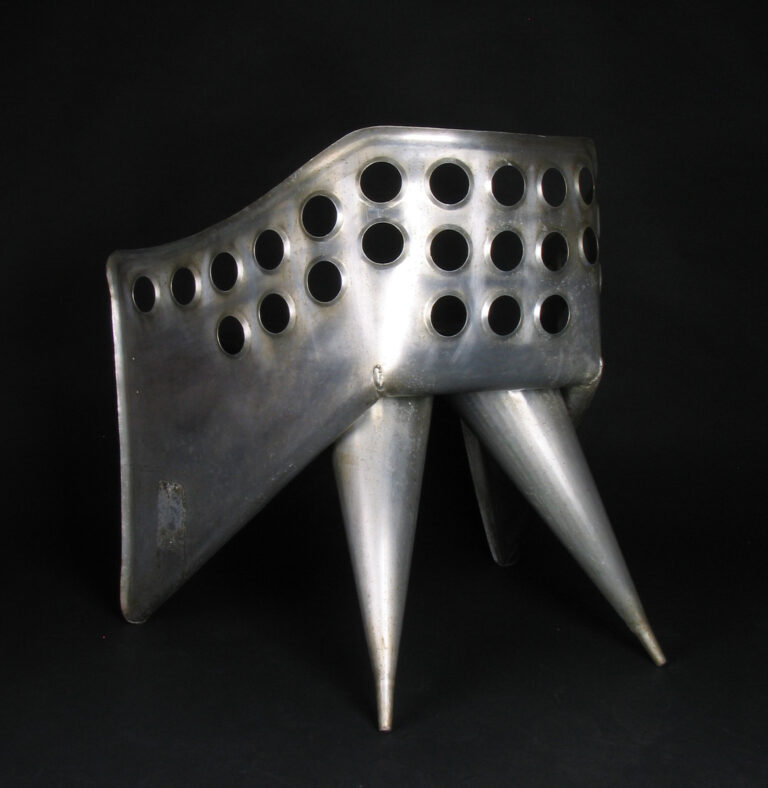
Aluminum Side/Table chair
Design: Utrecht, The Netherlands, ca. 1951
Executed between ca.1951-1964
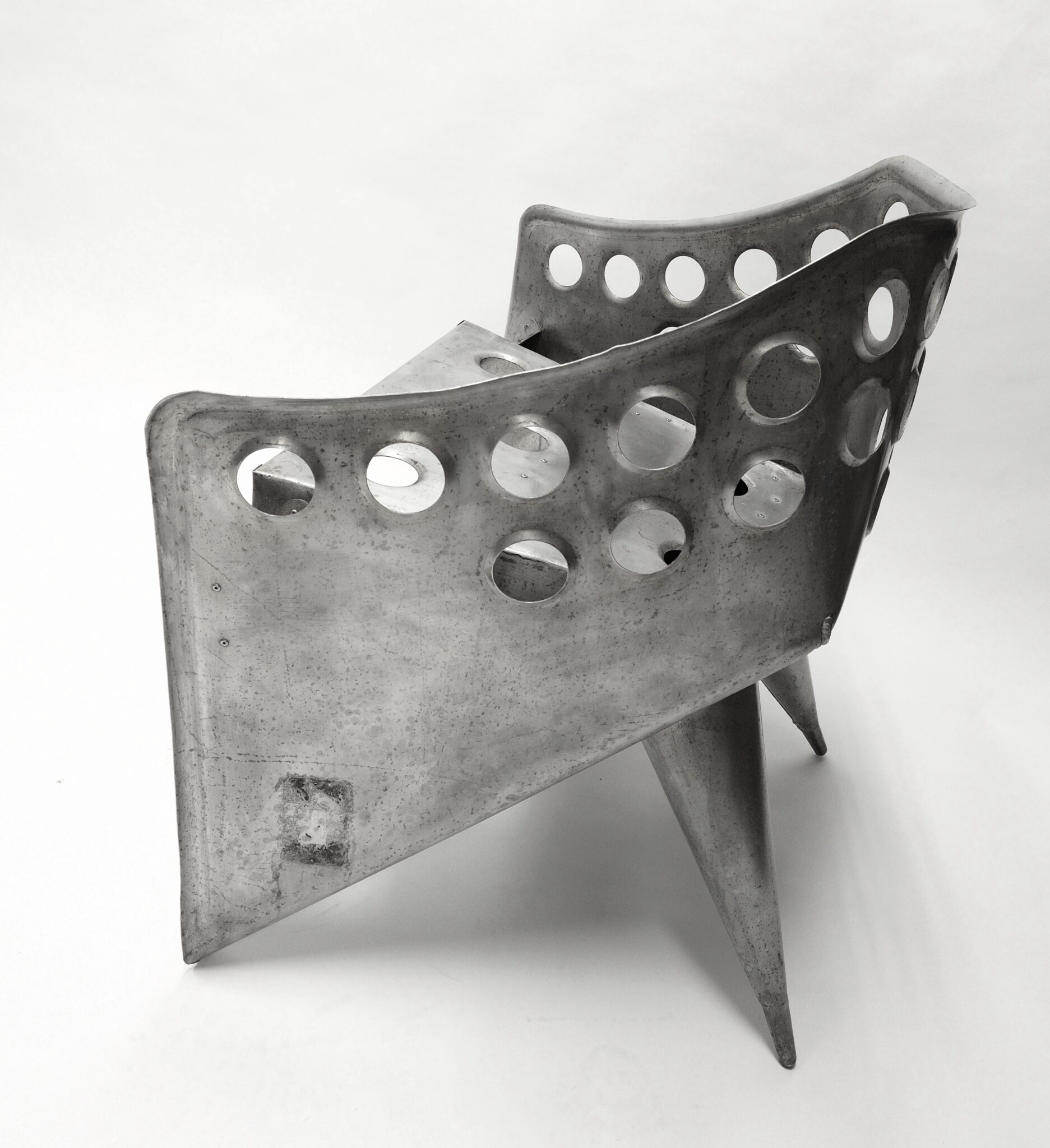
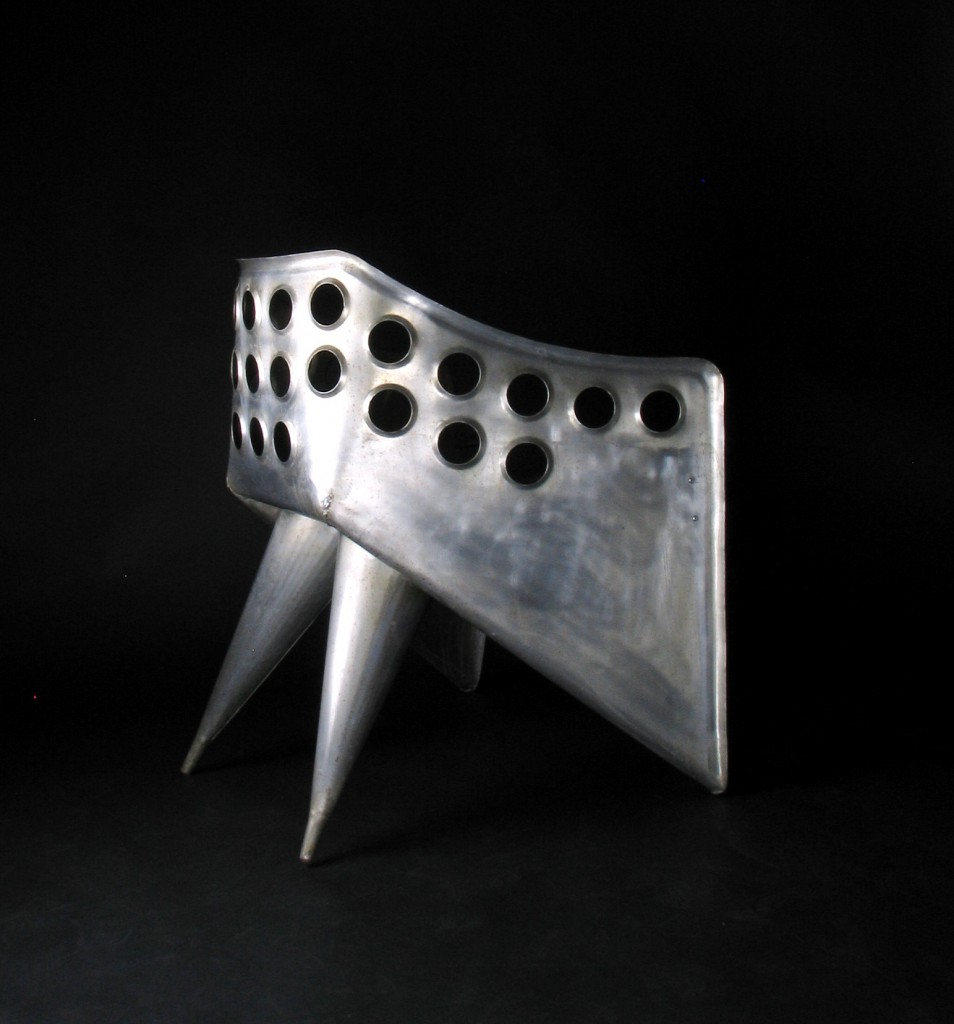
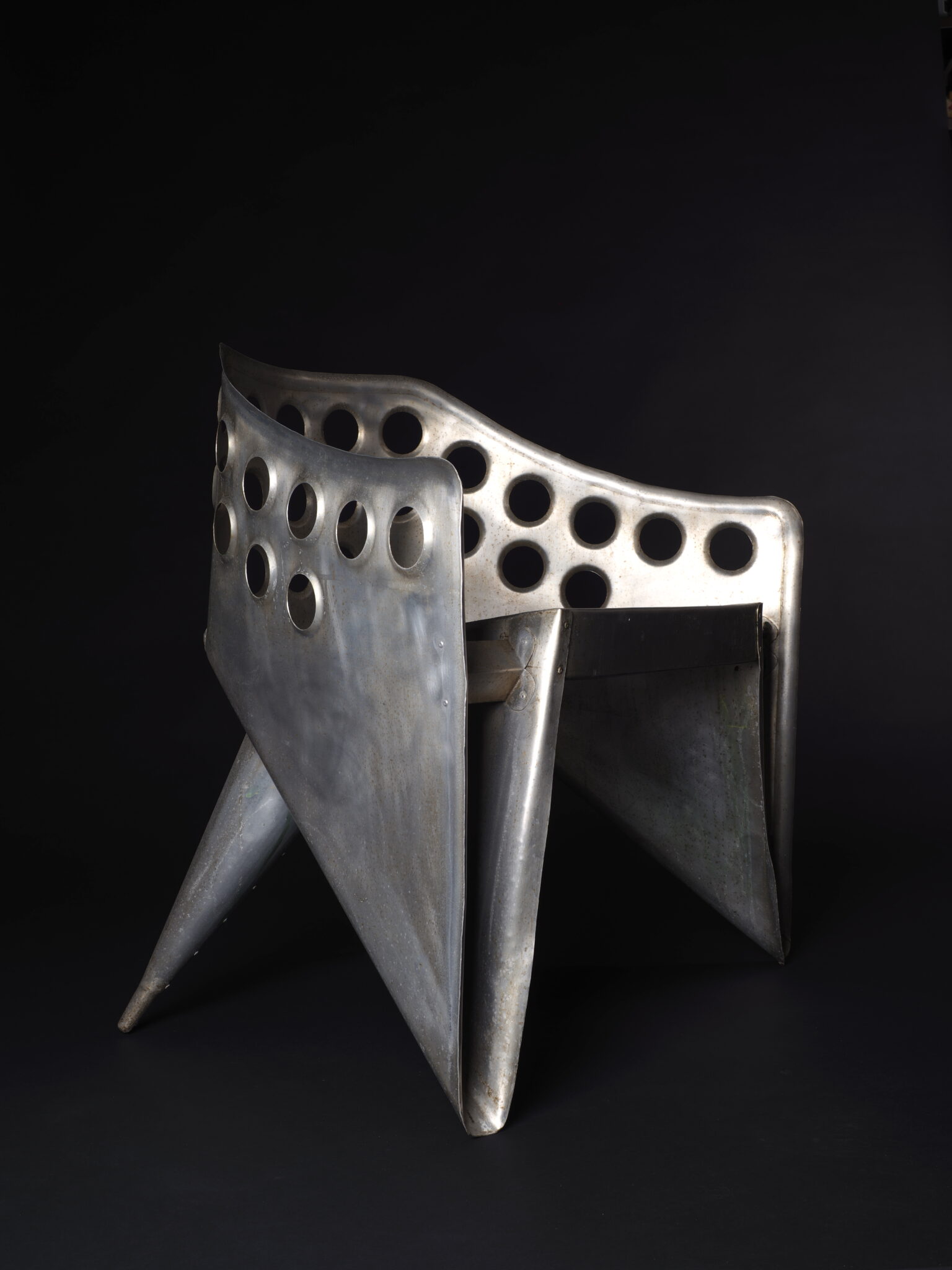
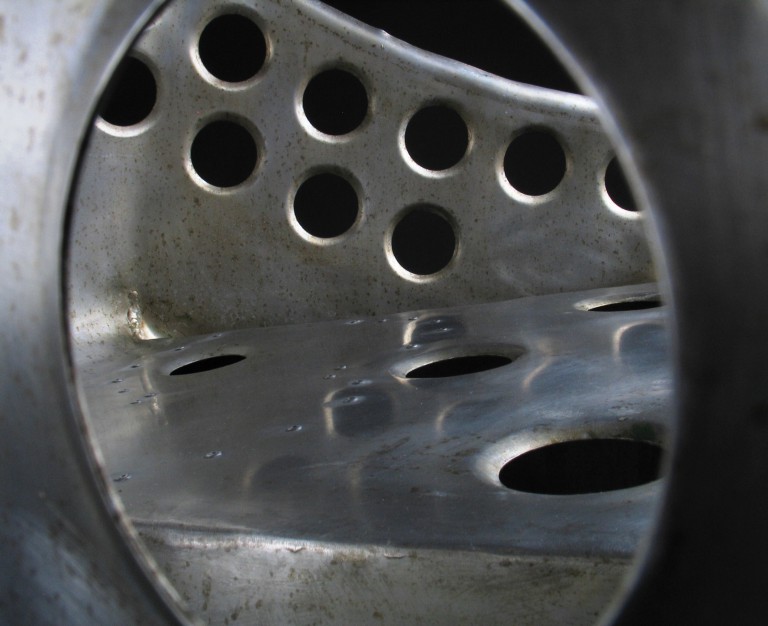
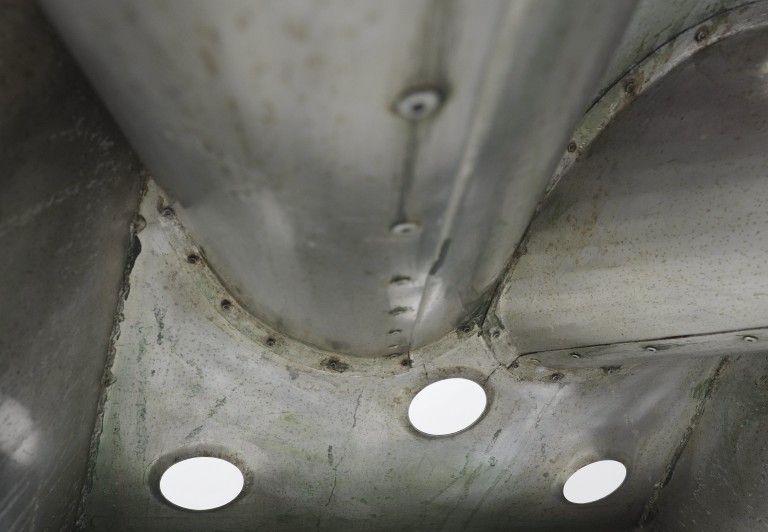
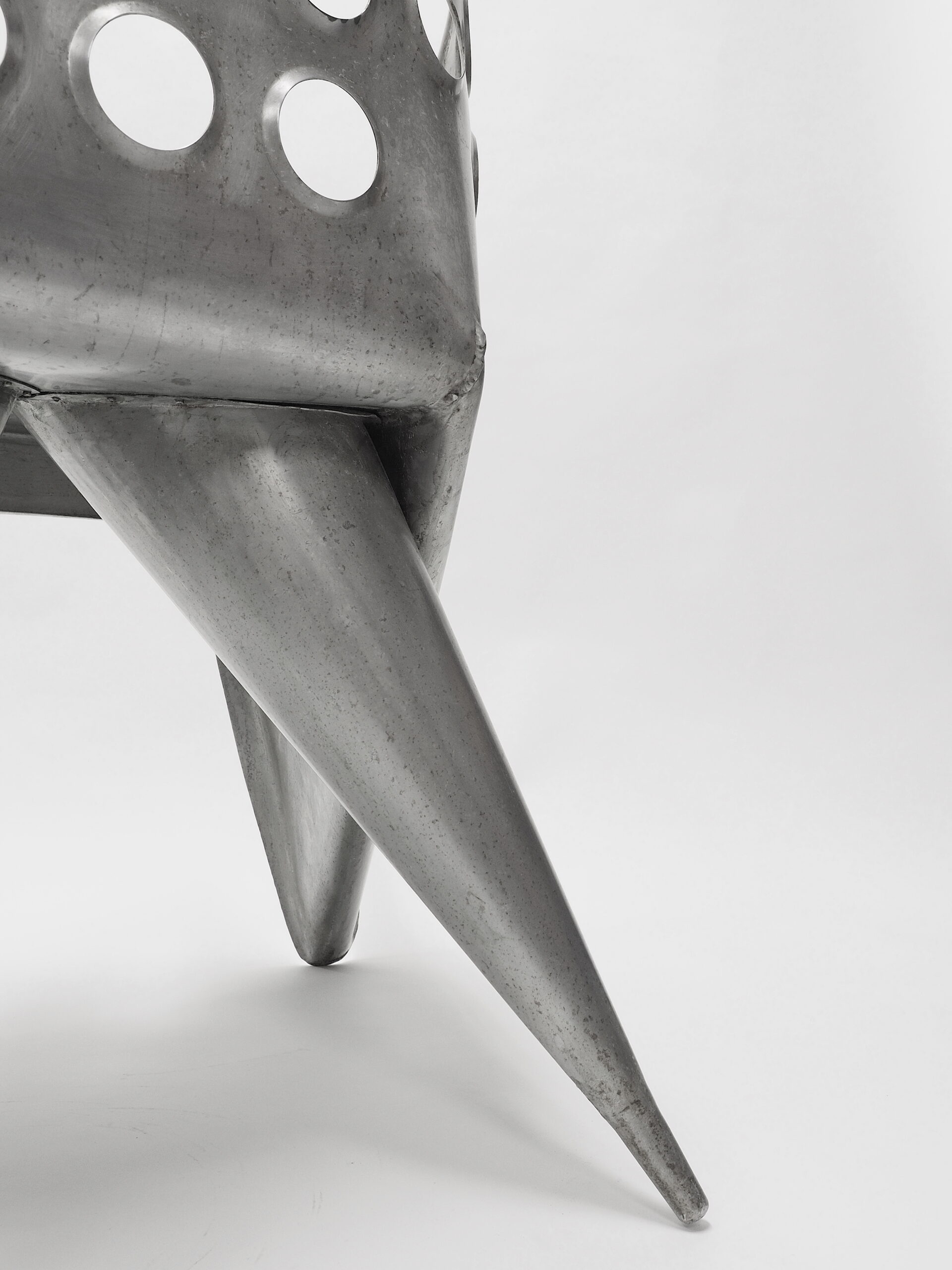
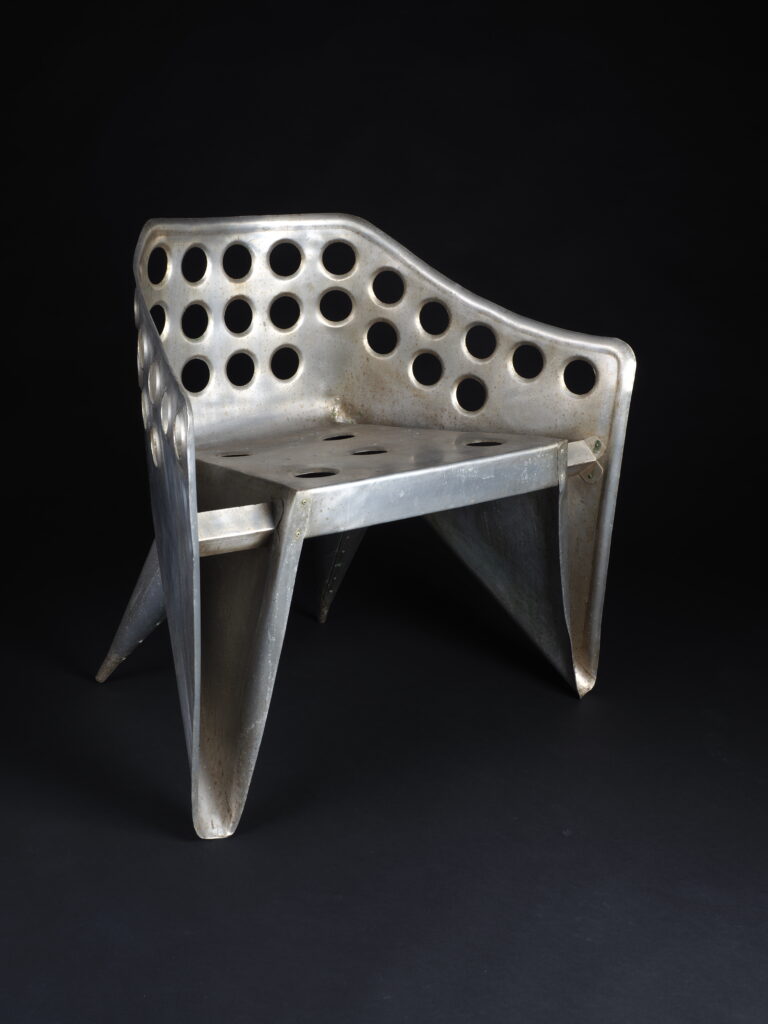
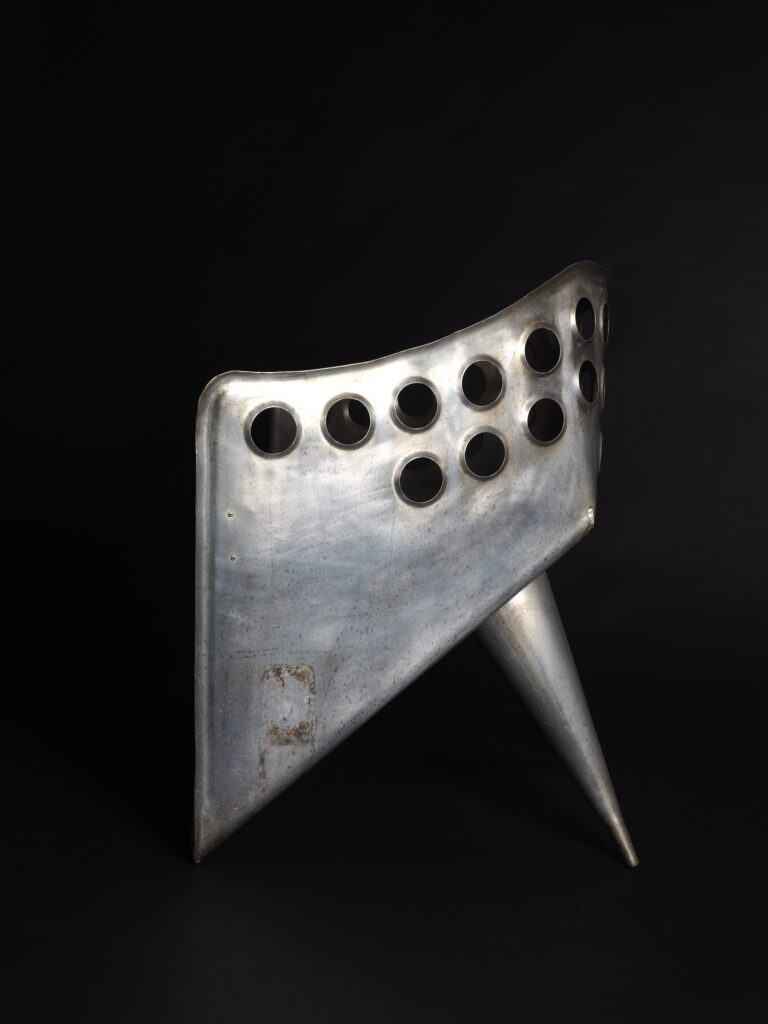
Side/Table Chair, folded and bent out of a single sheet of aluminum, assembled using blind-rivets and welding. Dimensions: 77 x 79 x 61 cm/24 x 30,3 x 31,1 In
The Folded Aluminum Side/Table Chair.
The absolute highlight of our collection important collectible design is this extremely rare, futuristic-looking side/table chair, folded from a single sheet of aluminum, designed by Gerrit Th. Rietveld in the 1950s.
Only two identical copies of this spectacular design are known to exist. One of the two chairs was acquired by the Centraal Museum Utrecht, The Netherlands in 2012. The other chair, we present in March at the art fair TEFAF Maastricht, is therefore the only example still available on the market.
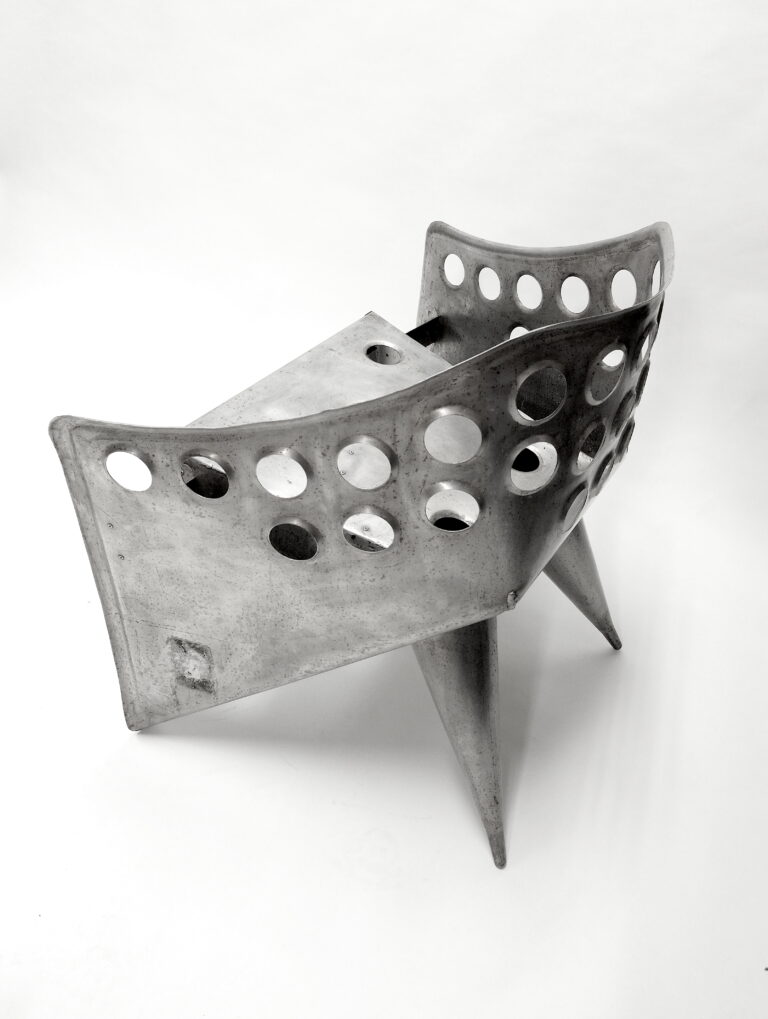
Gerrit Th. Rietveld
Around the 1920s Gerrit Rietveld transformed from a local Dutch cabinetmaker into one of the most influential architects and designers of the 20th century. Together with the paintings of Piet Mondriaan and Bart van der Leck, the early Rietveld designs became world famous icons of the aesthetic movement ‘De Stijl’. After his huge contribution to ‘De Stijl’, he continued to renew himself by playing a significant role in the subsequent modern movements. Rietveld was a true architectural visionary and although some of his designs were created about a hundred years ago, they remain “modern” and continue to inspire many young designers and architects around the globe today.
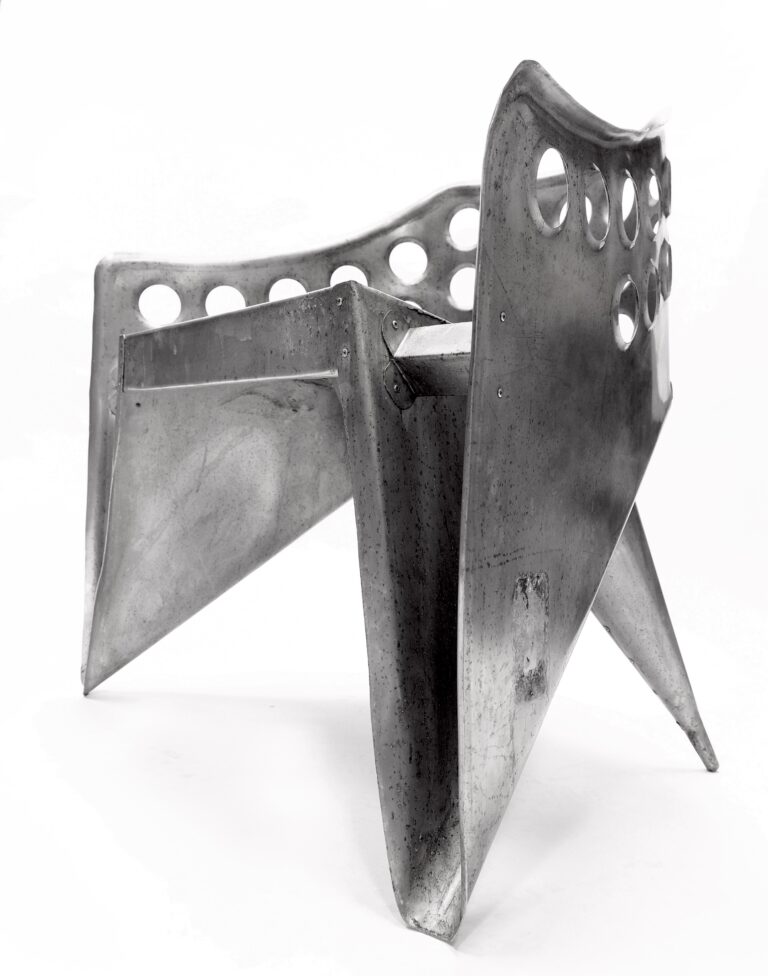
Rietveld Folding-Chairs.
In the early twentieth century, several well-known designers sought to design furniture that could be machine-made by folding and bending a single sheet of material. Machine production was the future, it was believed, and a modern chair that could be made by pressing or molding a single piece of material was the ultimate mass-produced product to meet the growing demand for good, affordable furniture.
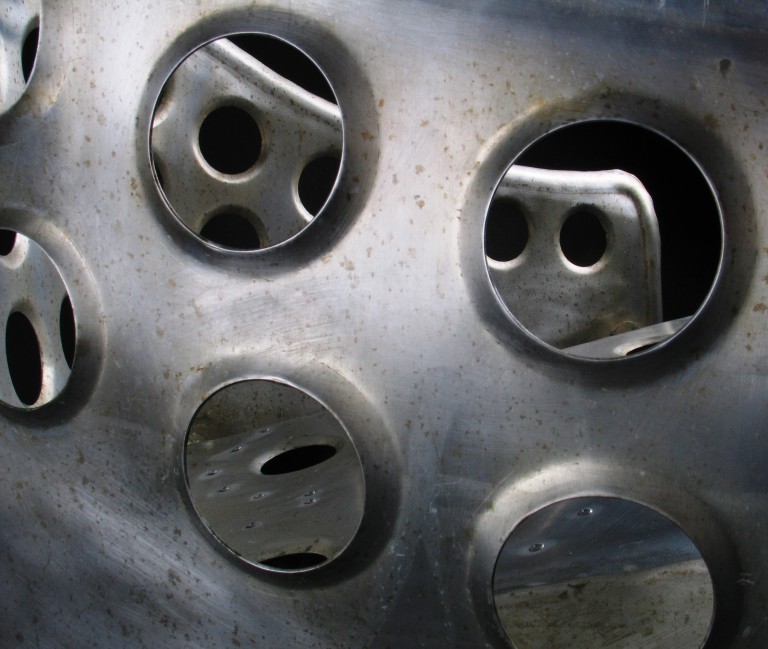
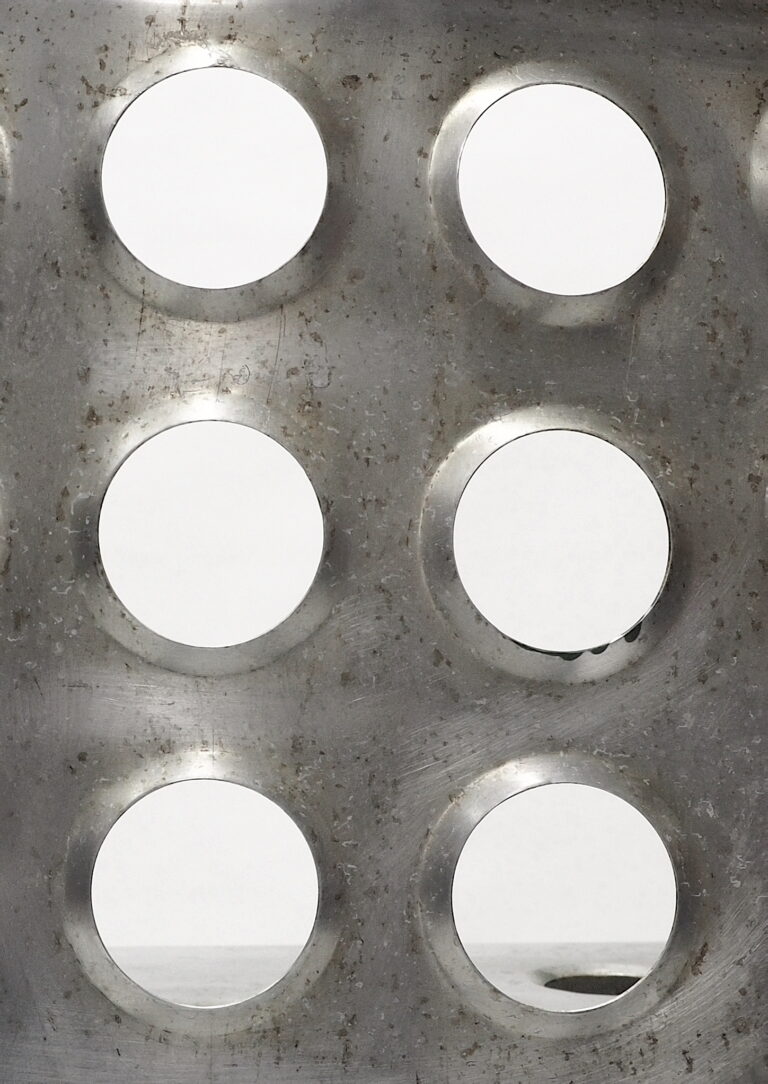
Gerrit Rietveld was also fascinated by this phenomenon, and as early as 1927, he designed the so-called Birza Chair, a chair made from a sheet of fiberboard. Later, during the second worldwar, he and his son Wim handcrafted a prototype of an armchair by folding and bending a single piece of sheet material. Preserved drawings and sketches again mention fiberboard as the material to be used, but the chair was made from a sheet of aluminum. To strengthen the thin aluminum, a decorative pattern of holes was pressed in, which gave the chair a futuristic machine look
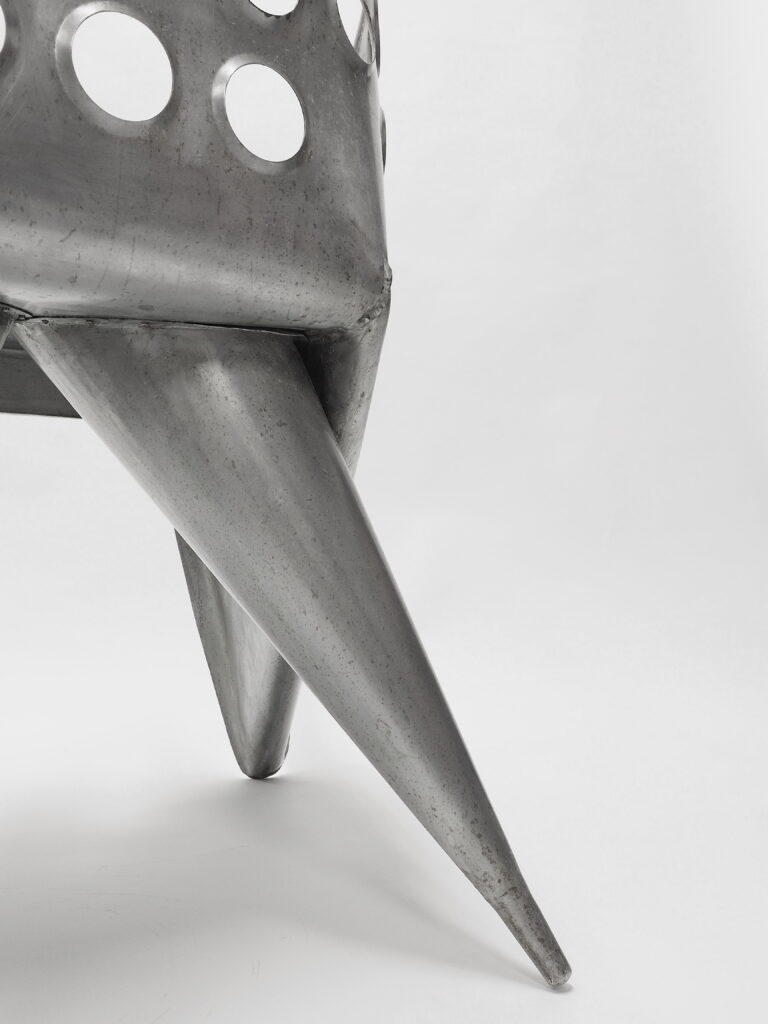
Research Stedelijk Museum Amsterdam, discovery of two high model Aluminum Side/Table Chairs
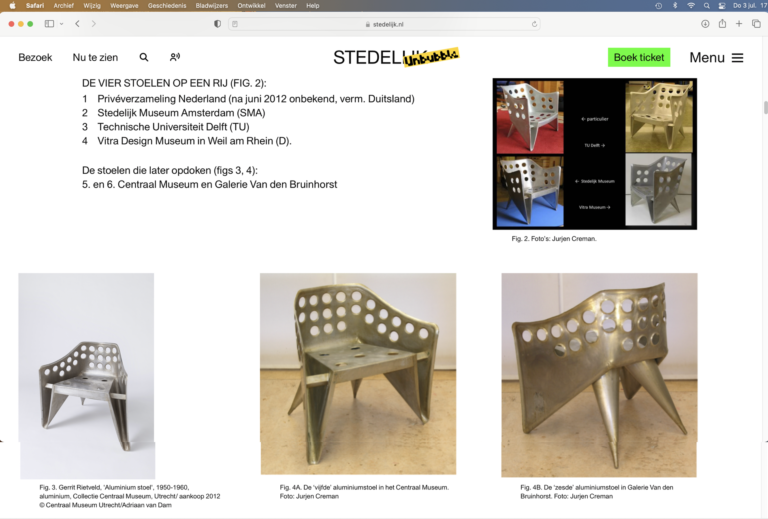
The independent art consultant, art historian and Rietveld expert, Rob Driessen, together with the Rietveld specialized restorer Jurjen Creman, are conducting a research in commission of the Stedelijk museum Amsterdam in 2010. Subject is examining the four Aluminum armchairs designed by Rietveld and determine their provenances and age because there was a lot of confusion about that at that time.
During this research Driessen is approached by an Englishman who inherited two higher versions of the Aluminum armchair. Driessen arranges for the chairs to come over to Amsterdam where he examines them together with Creman.
It was decided to expand the research and include these two previously completely unknown high versions of the Aluminum Chair. The screenshot below, from the website of the Stedelijk Museum Amsterdam, shows an overview of the six currently known chairs that were examined. The high model Aluminum Chair discussed here is pictured in the lower right.
Drawings
The researchers established that although the model and the production method of the two identical high Aluminum Side/Table Chairs differ in several respects from the four armchairs, these high variants are depicted at several design drawings, Rietveld made about folding-furniture.
Old Envelope
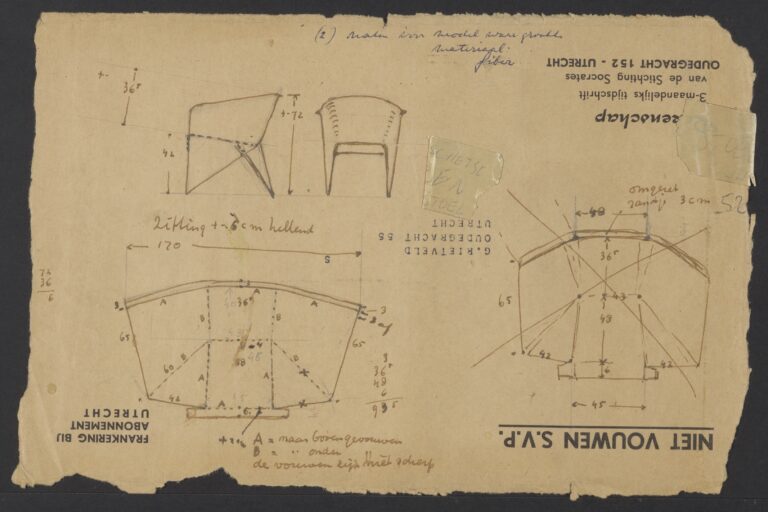
A spectacular discovery, in the archives, by Driessen and Creman is a previously unpublished drawing that Rietveld made on the back of an old envelope addressed to him in the 1950s. The drawing shows a front- and sideview of the high model Aluminum Side/Table Chair, from our collection and the one of Centraal Museum Utrecht, alongside with two drawings with dimensions and instructions for folding the chair from a single sheet of material. As in other drawings in which Rietveld sketched the design of the high and low model Aluminum Chair, “fiber” is again mentioned as the material to be used.
“The model of the aluminum chair shown here is a post-war production. It is a high model that Rietveld sketched on the back of an old envelope, which ironically bears the words “Do not fold.” The note specifies that the chair should be executed in fiberboard. In a drawing of a series of furniture intended to be made in rattan, the same chair is depicted in both a high and a low version. This aluminum chair and the archival materials demonstrate that, for Rietveld, different materials were suitable for the execution of his design. For the first model, he deliberately chose aluminum because he could work it relatively easily himself.”
Date
Due to the address and sender of the envelope, this is the only drawing of Rietveld’s folded-furniture that can be dated with certainty. This allows us to date our Aluminum Side/Table Chair and the one from Centraal Museum Utrecht, to the period 1951-1964.
Shape of the Seat-Shell and Pattern of holes
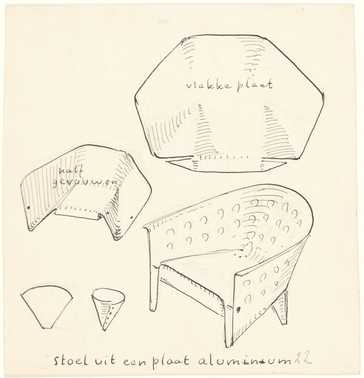
One of the most striking differences between the two high-and four low model aluminum chairs, besides the hight, is the shape of the seat-shell and the different pattern of holes pressed in. A drawing from around 1930-1940, found by the researchers in the RSA (Rietveld Schröder Archive), shows a aluminum arm chair of which the shape of the seat-shell and the pattern of holes correspond to how the high model Side Chairs are executed.
This might suggest that Rietveld at first considered applying the shape of the seat-shell and the pattern of holes, now only found on the high aluminum side chairs, to the low armchairs as well.
Results
The results of the research, conducted by Driessen and Creman, were published in 2021 on the website of their commissioner, the Stedelijk Museum Amsterdam.
The research has yielded many new insights and results, such as the design sketches and the datable drawing of the High model Aluminum Chairs on the old envelope, and it has debunked the myth that the four low armchairs were all made during WWII by Rietveld and his son using aluminum sheet material from a crashed aircraft.
No research provides the answers to all questions, the researchers therefore conclude with questions and suggestions for further research, including the question: “Why does a drawing of the Aluminum chairs in the collection of Het Nieuwe Instituut have English captions? Is there a possible connection with Rietveld’s travels to the US in 1947 and/or 1949?”
Perhaps the answer to that question can be found in the provenance of the two Aluminum Table Chairs, the earliest now known origin of which lies in America. One of the former owners, Sham Ul Alam, stated that the Van Wagners, who owned the chairs before 1973, purchased the chairs in the USA together with an aluminum table from an unknown source. The Van Wagners had professional contacts with a number of modern furniture manufacturers, such as the aluminum furniture manufacturer Warren Mc.Athur.
Provenance
Before 1973: Howard en Sue Van Wagner, Malibu, California USA;
Ca. 1973: Mr. Ul Alam, England;
2009-2010: Sham Ul Alam, Manchester England;
2012: One of the chairs purchased by the ‘Centraal Museum’, Utrecht The Netherlands;
2013: The remaining chair purchased by fine art dealer Javier Doria in Spain;
2014: John Turner Fairchild, collector at Ibiza Spain/Los Angeles USA;
2014: Van den Bruinhorst Gallery, Kampen The Netherlands
Exhibitions
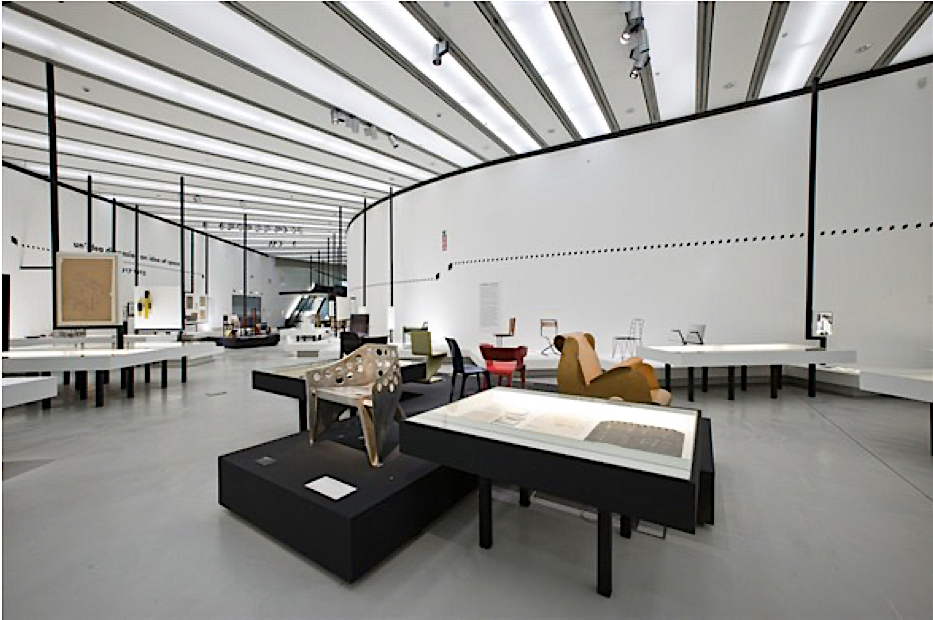
Through Driessen and Creman, Mr. Sham Ul Alam is getting in contact with The Centraal Museum in Utrecht who are very interested in this version of the Aluminum chair. The museum asks him to lent one of the chairs to them for the exhibition ‘Rietvelds Universe’. In 2011 this exhibition travels to Italy where the chair of Mr. Ul Alam is shown at the museum MAXXI in Rome.
Acquisition
After the exhibitions, the Centraal Museum Utrecht decided to purchase one of the two chairs in 2012. The other copy was sold to an art dealer in Spain and through him to a collector based at Ibiza/Los Angeles, from whom Galerie Van den Bruinhorst acquired it.